
A bird portrait sizes guide can save you from the most common mistake bird lovers make: picking a print that looks amazing on screen but awkward on the wall. Too small and your cockatiel disappears into the drywall. Too large and your budgie looks like a prehistoric raptor looming over the couch.
We've helped thousands of bird parents turn their favorite photos into wall-worthy art, and size questions come up constantly. The right dimensions depend on your wall space, the style of portrait, and the type of bird you're showcasing. In this guide, we'll walk you through standard sizes, wall-matching formulas, and style-specific tips so your bird art looks exactly the way it should, stunning.
Standard Bird Portrait Sizes and What They're Best For
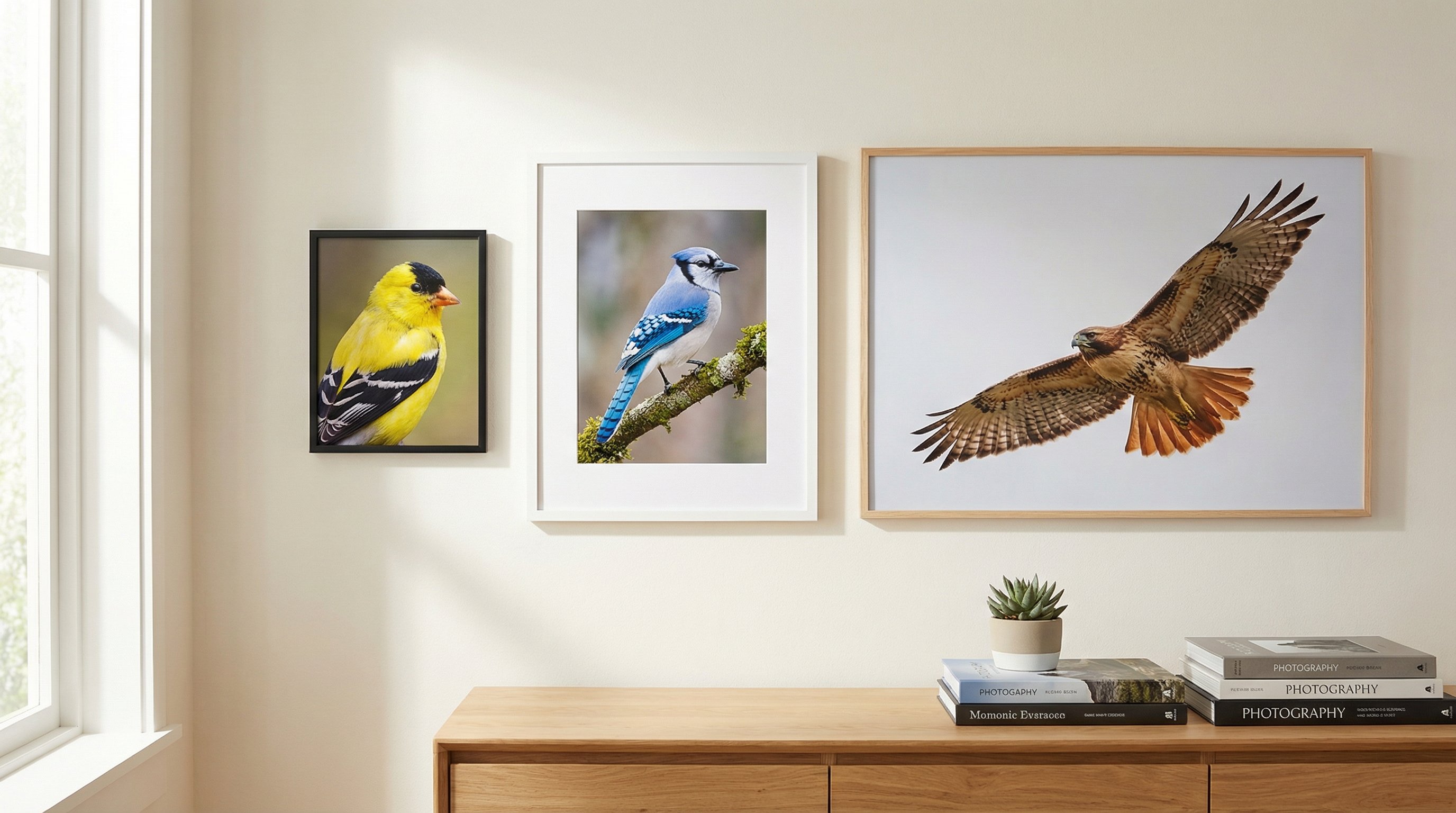
There's no single "correct" size for a bird portrait. But photography and fine art guidelines give us a solid framework. The key rule: your bird should fill 35–85% of the frame width (landscape) or height (portrait). Go below that range and your bird looks lost. Go above it and the composition feels cramped.
Here's how the three main size categories break down:
Small Prints (4x6" to 8x10")
These are perfect for head-only or head-and-shoulders shots. Think close-ups that highlight your bird's eyes, beak texture, and feather detail. Small prints work beautifully on desks, bookshelves, and narrow wall spaces.
If you have a smaller bird, a finch, a lovebird, a parakeet, a close-up printed at this size keeps them looking naturally proportioned. You get intimacy without exaggeration. Our bird art prints gallery is full of examples at this scale.
Medium Prints (11x14" to 16x20")
This is the sweet spot for full-body perched portraits. A medium print gives you room to balance the composition with equal space above and below your bird, plus a bit more room in front of the direction they're facing.
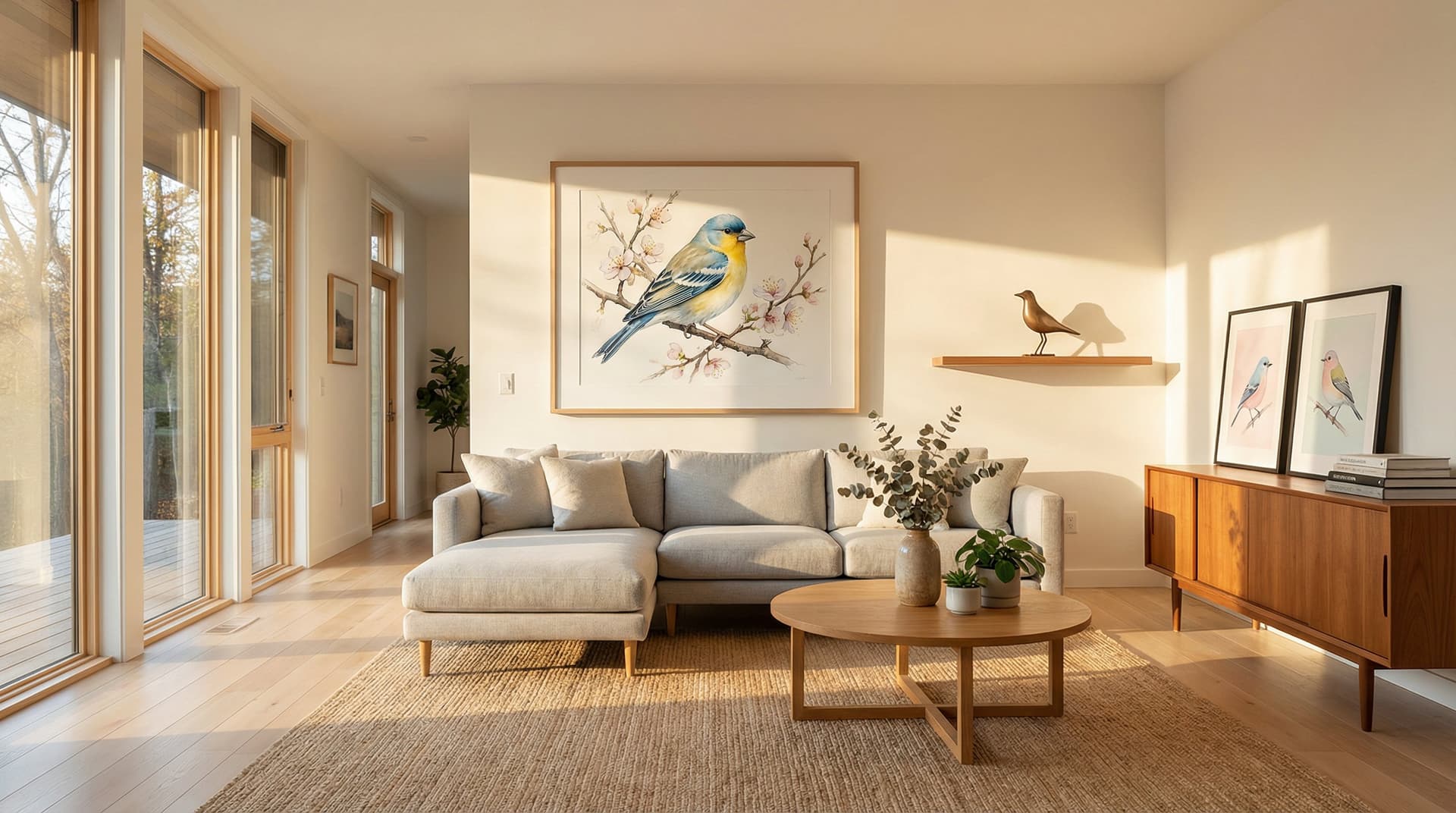
Medium sizes suit most living rooms, bedrooms, and hallways. They're substantial enough to anchor a wall without overwhelming the space. If you're creating custom bird wall art for the first time, this range is a safe and satisfying starting point.
Large Prints (24x36" and Up)
Large formats shine with dynamic compositions, flying birds, bird groups, or dramatic environmental shots. At this scale, the rule of thirds becomes essential: place your bird off-center with added space in the direction of movement.
A 24x36" print (or larger) makes a bold statement in living rooms, offices, or entryways. For birds in flight, the extra canvas gives the image room to breathe. Large bird wall art in this range turns a simple photo into a genuine focal piece.
How to Match Your Bird Portrait Size to Your Wall Space
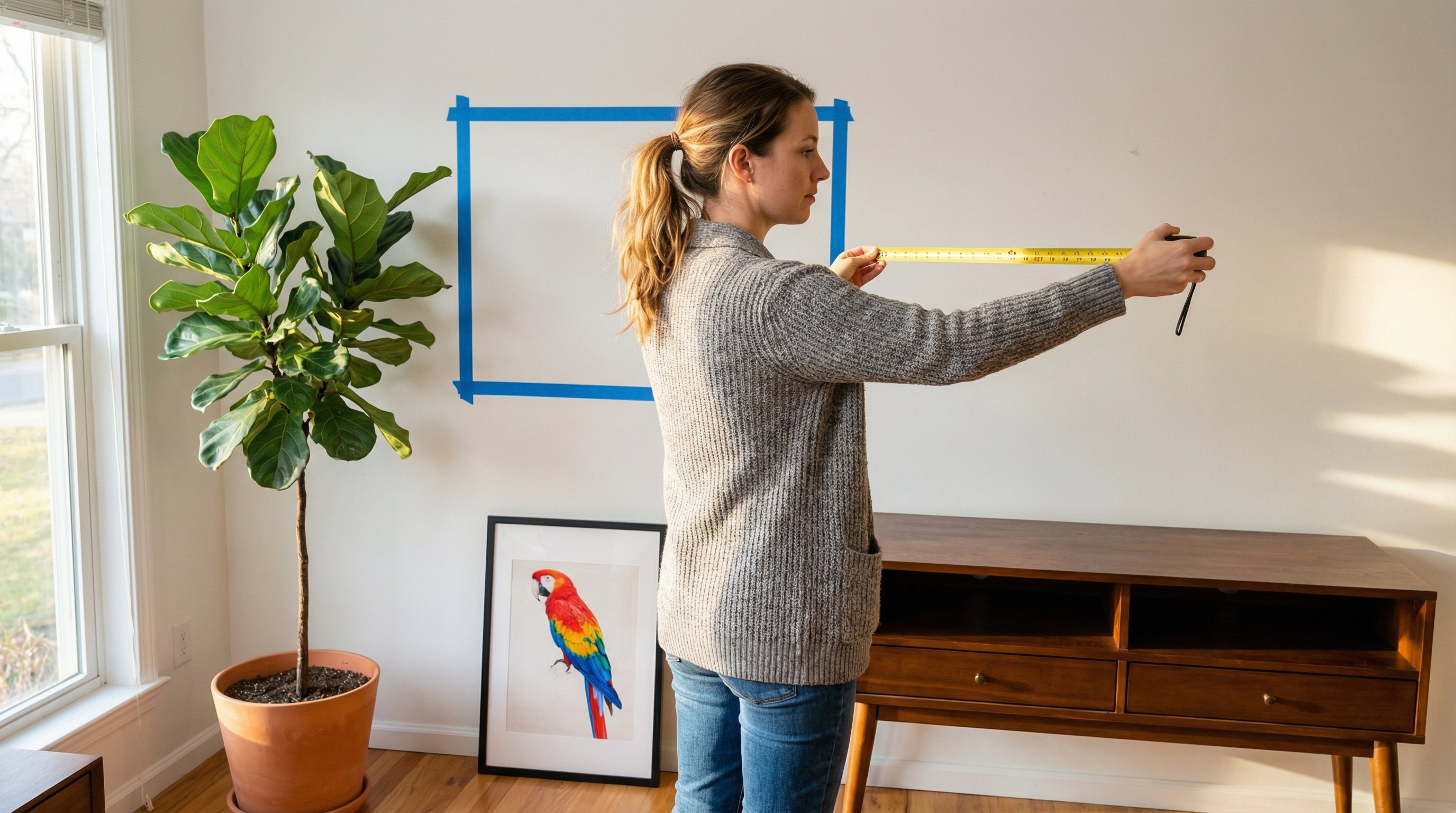
Picking a size you love is one thing. Making sure it actually fits your wall is another. Here's a practical approach we recommend to every bird parent.
Step 1: Measure Your Wall
Grab a tape measure and note the width and height of the available wall space where you want the portrait. Not the entire wall, just the area between furniture, windows, or other decor. Write it down.
Step 2: Apply the 60–75% Rule
Your print should fill 60–75% of that measured space. This ratio prevents overcrowding while keeping the portrait from looking like a postage stamp on a billboard.
Here's a quick reference:
- 3-foot wall section → 20x30" print
- 4-foot wall section → 24x36" print
- 5-foot wall section → 30x40" or a gallery arrangement
- Small nook or shelf area → 8x10" or 11x14"
Step 3: Consider the Room Scale
A spacious living room with high ceilings can handle a 36x48" statement piece without blinking. A cozy bedroom or home office? A 16x20" print will feel more proportional.
Small rooms favor compact, detailed portraits. Head shots and close-ups printed at smaller sizes create visual interest without making the space feel cluttered. Large rooms invite bigger, bolder compositions.
Step 4: Check the Bird-to-Frame Ratio
Remember that 35–85% guideline from earlier. Even after you've chosen the right print size for your wall, make sure the bird itself occupies the right proportion within the image. A tiny bird centered in a massive white canvas can look unintentional.
When you upload your photo to create bird art prints, our AI crops and frames automatically, but it helps to start with a well-composed photo. If you're unsure, the free preview lets you see exactly how the final portrait will look before you commit.
Pro Tip: Use Painter's Tape
Before ordering, tape the print dimensions directly on your wall with painter's tape. Step back. Live with it for a day. You'll know immediately whether the size feels right or if you should go bigger (people almost always wish they'd gone bigger).
Choosing the Right Size for Different Bird Portrait Styles
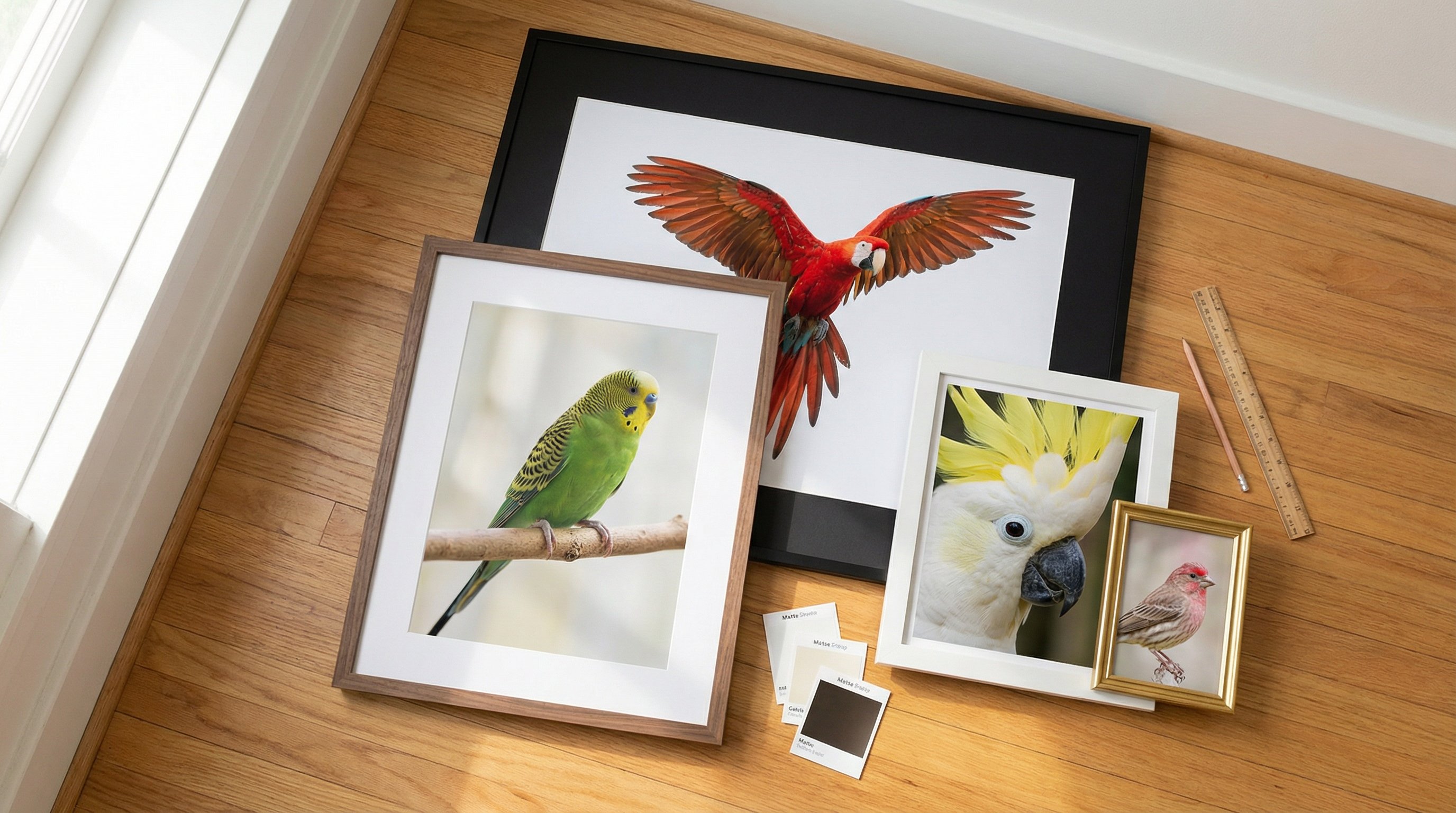
Not all bird portraits are created equal. The style of your portrait, and the pose of your bird, should directly influence the size you pick.
Full-Body Perched Portraits
These are the classics. Your bird sitting on a branch, a perch, or your hand. Medium sizes (11x14" to 16x20") work best here because you need vertical space above and below the bird, plus horizontal breathing room.
Keep equal space on top and bottom. Give a little extra room in front of whichever direction your bird faces. This creates a natural, balanced composition that draws the eye straight to your feathered friend.
Head and Shoulder Close-Ups
Small prints (4x6" to 8x10") are ideal for these intimate shots. Position the head near the top of the frame with space in front of the bill. This classic portrait framing makes your bird's personality pop, especially species with expressive eyes like cockatoos and macaws.
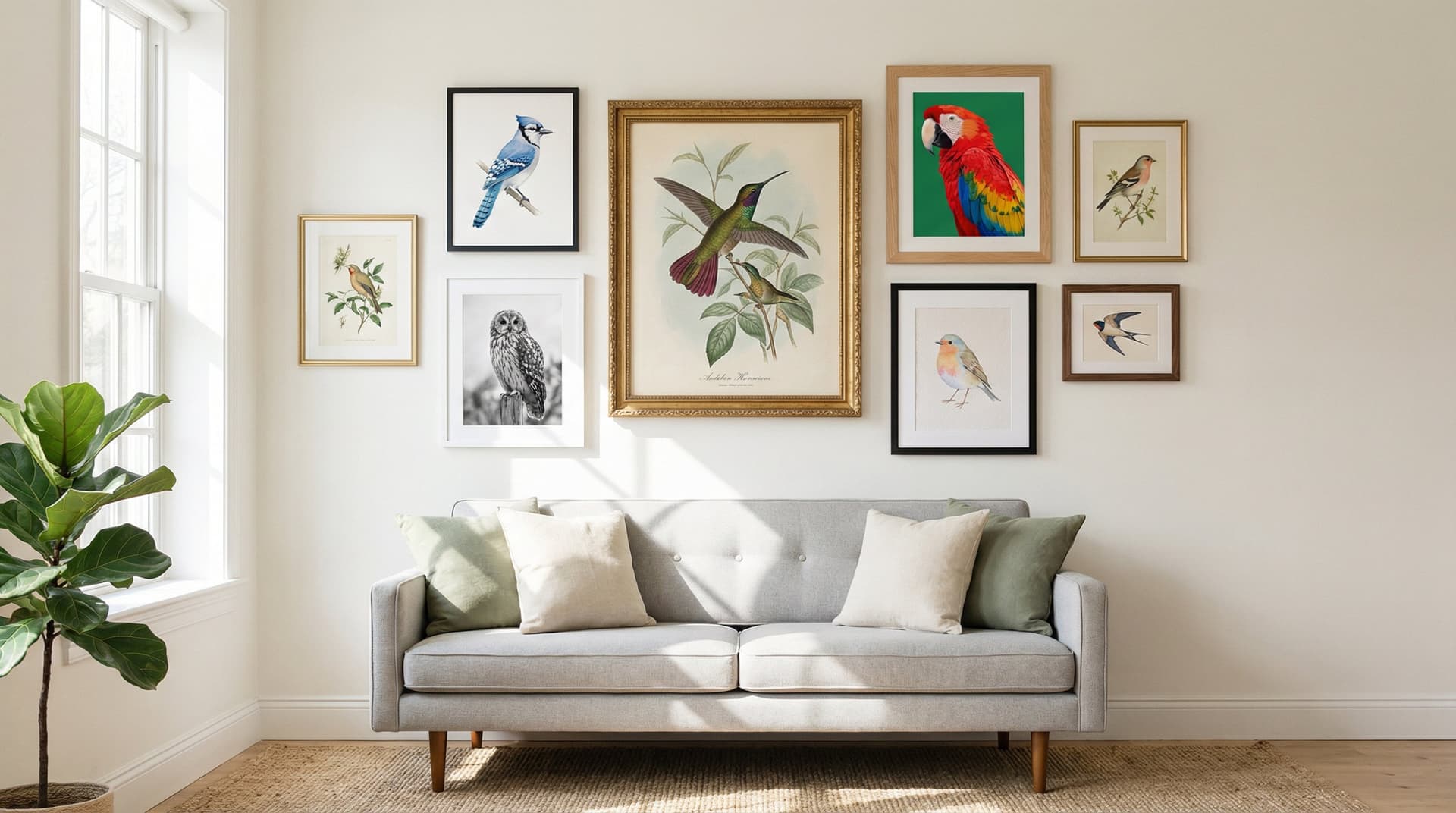
Close-ups also make excellent framed bird wall art for grouped displays. A cluster of three or four small framed portraits creates a gallery effect that's hard to beat.
Birds in Flight
Flight shots demand space. Go large, 24x36" or bigger. Leave more room in the direction your bird is flying and use the rule of thirds to place the bird off-center. This gives the image energy and movement.
A flying bird printed too small loses its drama. These shots are meant to be showstoppers, so let them fill the wall.
Small Bird Species
Finches, wrens, sparrows, and other petite birds have a natural "cute" factor that you don't want to lose. A4 or A3 close-ups (roughly 8x12" to 12x17") keep them looking true to life. Blowing a tiny bird up to poster size can feel strange, the proportions just don't translate the same way.
General Style Tips
- Side profiles over front views tend to show more character and feather detail.
- Avoid busy backgrounds. Simple or blurred backgrounds keep the focus on your bird.
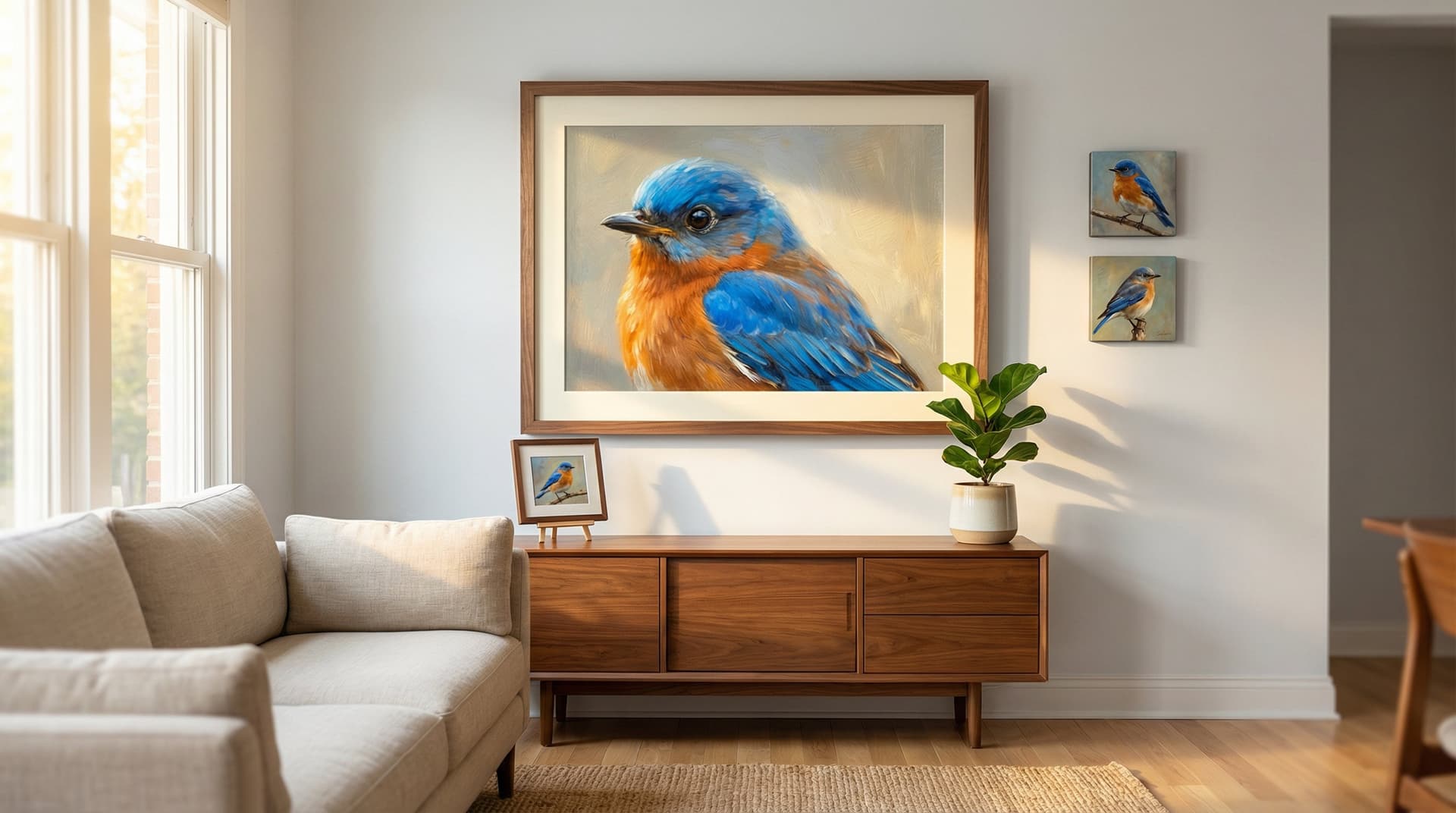
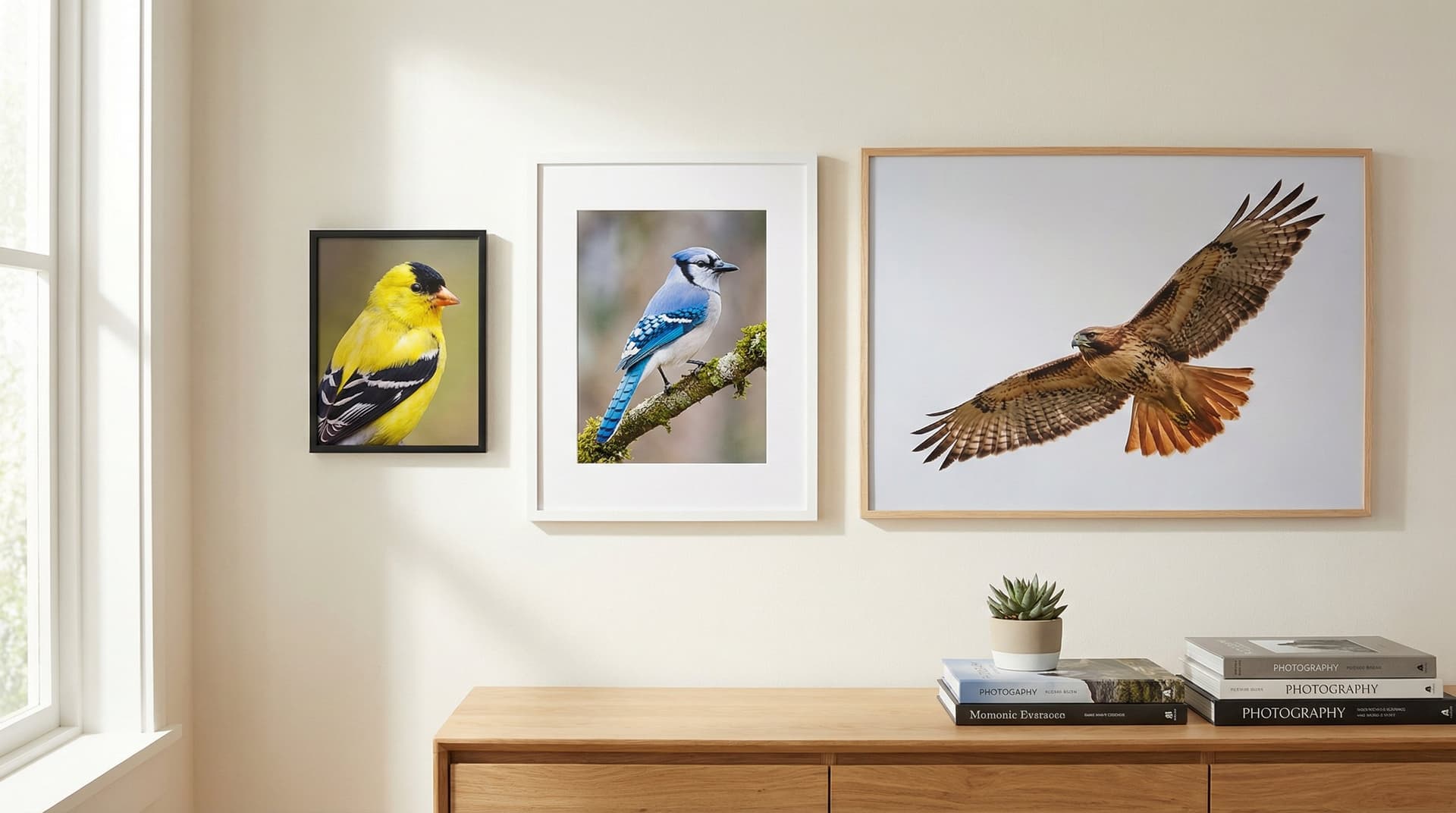
- Mixed arrangements work. Combine a medium centerpiece with smaller flanking prints for a dynamic wall display.
If you're still deciding on a style, our bird art blog has inspiration posts covering everything from watercolor effects to oil painting styles. And our portrait pricing page breaks down what's included at every size tier.
Conclusion
The right bird portrait size comes down to three things: your wall space, your bird's pose, and the statement you want to make. Measure first, apply the 60–75% rule, and match the print style to the composition.
And when in doubt? Go one size up. We've never heard a bird parent say, "I wish I'd gone smaller." Your feathered friend deserves to be seen.
Frequently Asked Questions About Bird Portrait Sizes
What is the ideal bird portrait size for a small wall space?
For a small nook or shelf area, choose 8x10" or 11x14" prints. These sizes prevent overcrowding while keeping your bird portrait visible. Apply the 60–75% rule: your print should fill 60–75% of your available wall space for optimal visual balance.
How do I choose the right bird portrait size for my wall?
Measure your wall space first, then apply the 60–75% rule—your print should fill 60–75% of that area. For a 3-foot wall section, use a 20x30" print; for 4 feet, go 24x36". Always ensure the bird itself occupies 35–85% of the frame width or height.
What size should I print a bird portrait of a flying bird?
Flying birds demand large formats: 24x36" or bigger. These dynamic shots need extra canvas space in the direction of flight and off-center placement using the rule of thirds. Printing flight shots too small loses their drama and movement.
Are there standard bird portrait size guidelines used by photographers?
Yes. Professional guidelines recommend framing your bird at 35–85% of the frame width (landscape) or height (portrait). Below that range, the bird looks lost; above it, the composition feels cramped. This ratio applies across all sizes from small to large.
What bird portrait size is best for head-and-shoulders close-ups?
Small prints (4x6" to 8x10") work best for intimate head shots. Position the head near the top frame with space in front of the bill. This framing style highlights your bird's eyes and personality, especially for expressive species like cockatoos and macaws.
How should I hang multiple bird portraits on one wall?
Mix a medium centerpiece (11x14" to 16x20") with smaller flanking prints (4x6" to 8x10") for a dynamic gallery arrangement. Groups of three or four small framed portraits create visual interest without overwhelming the space on smaller walls.