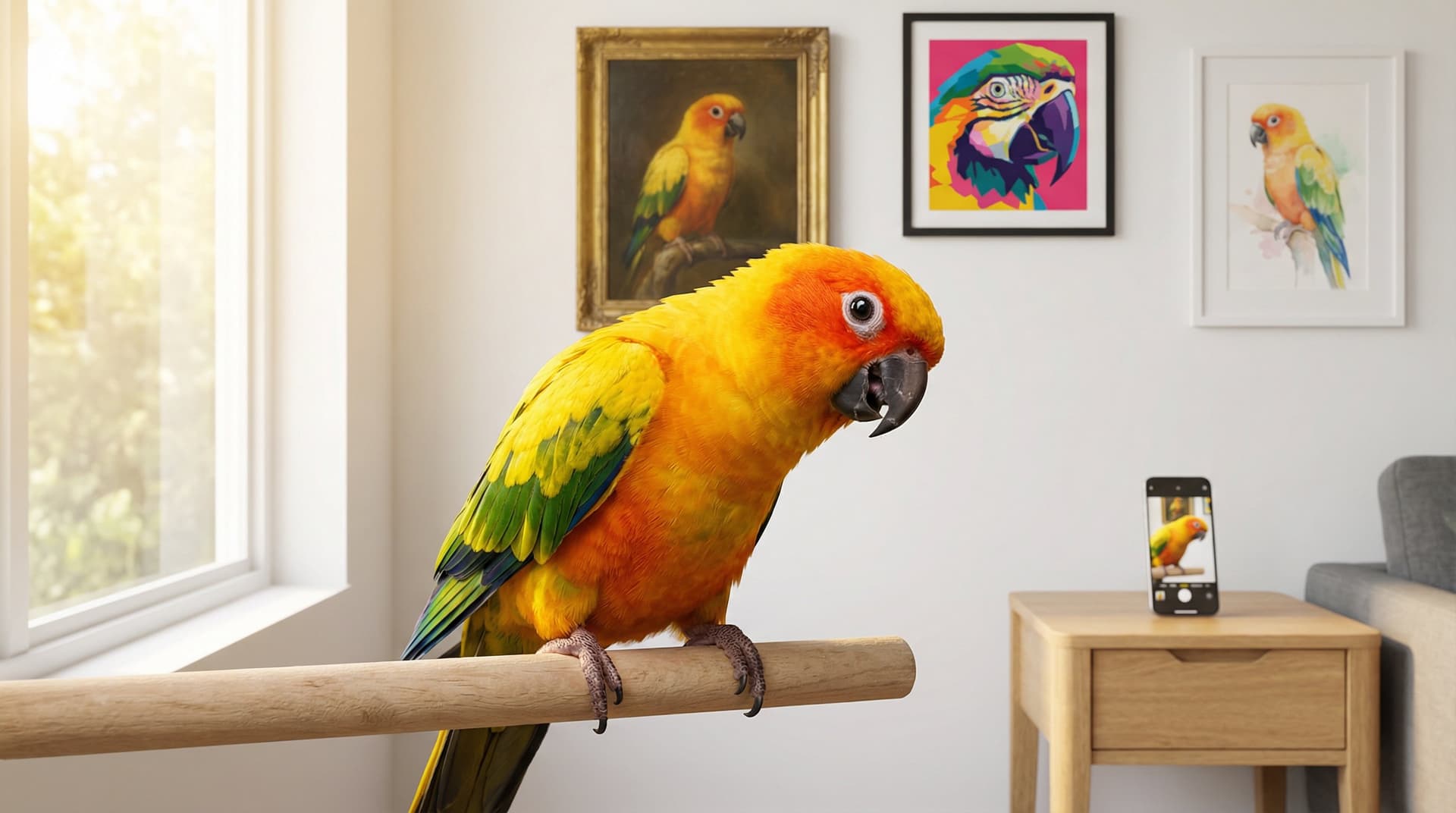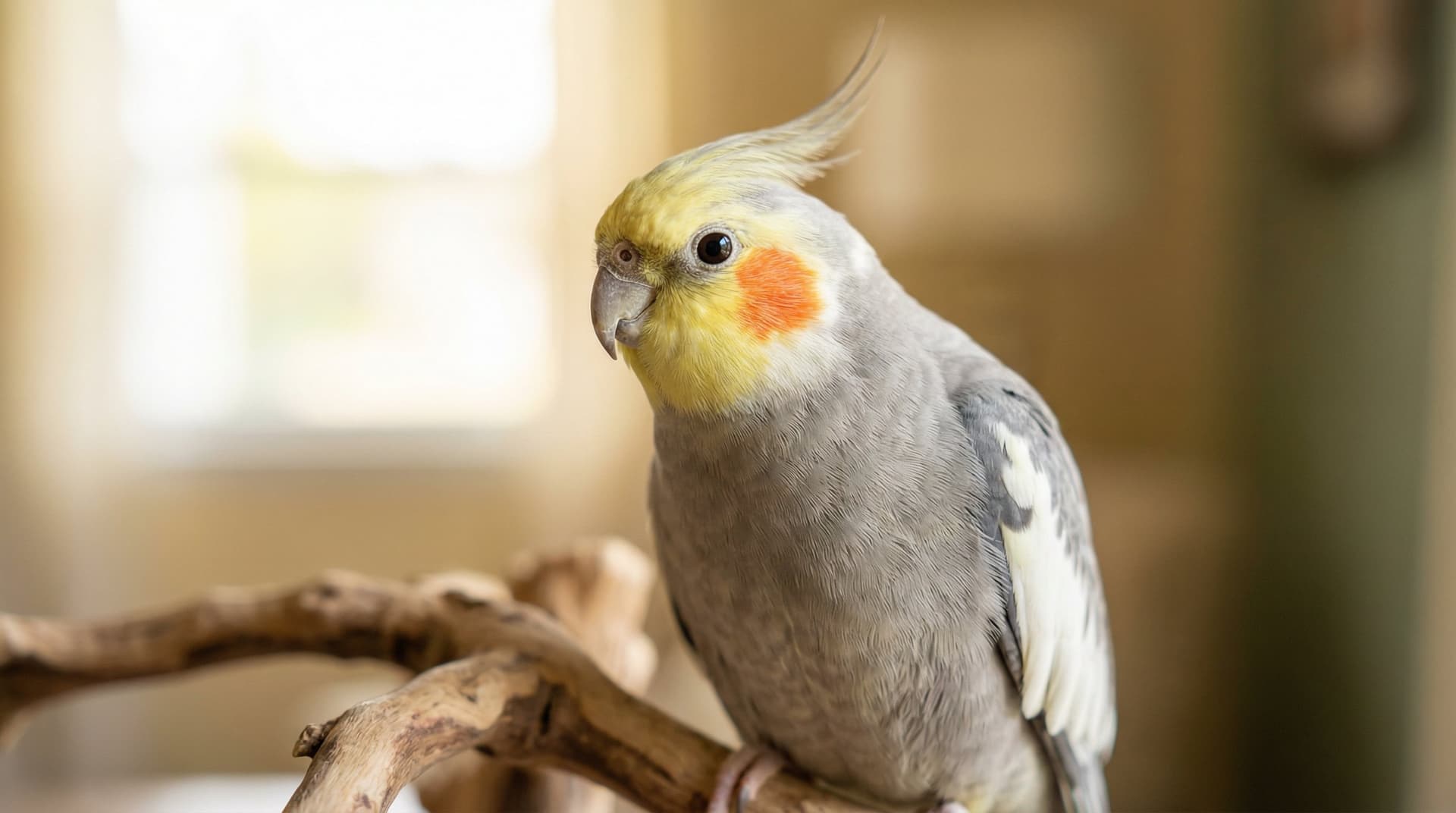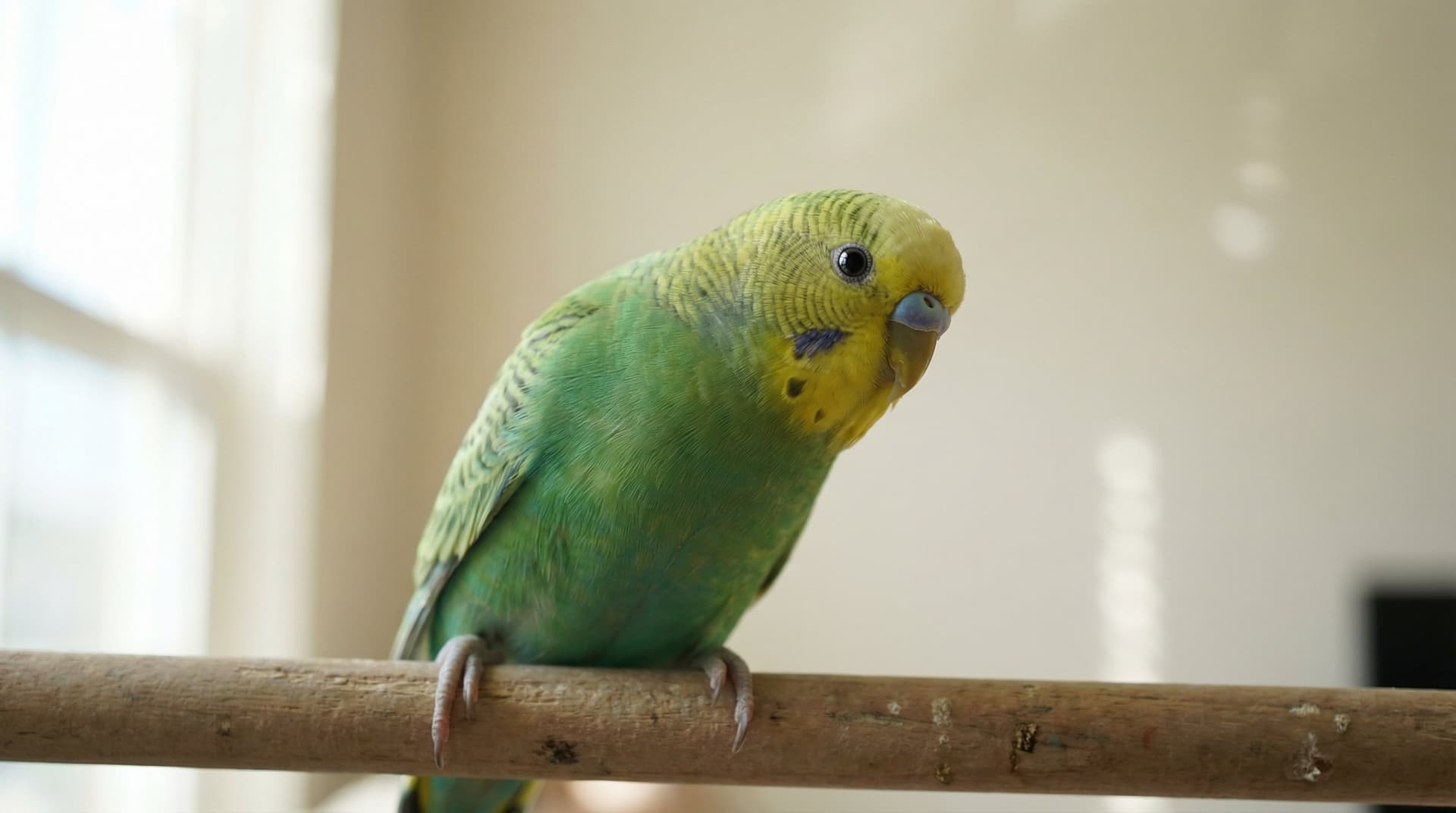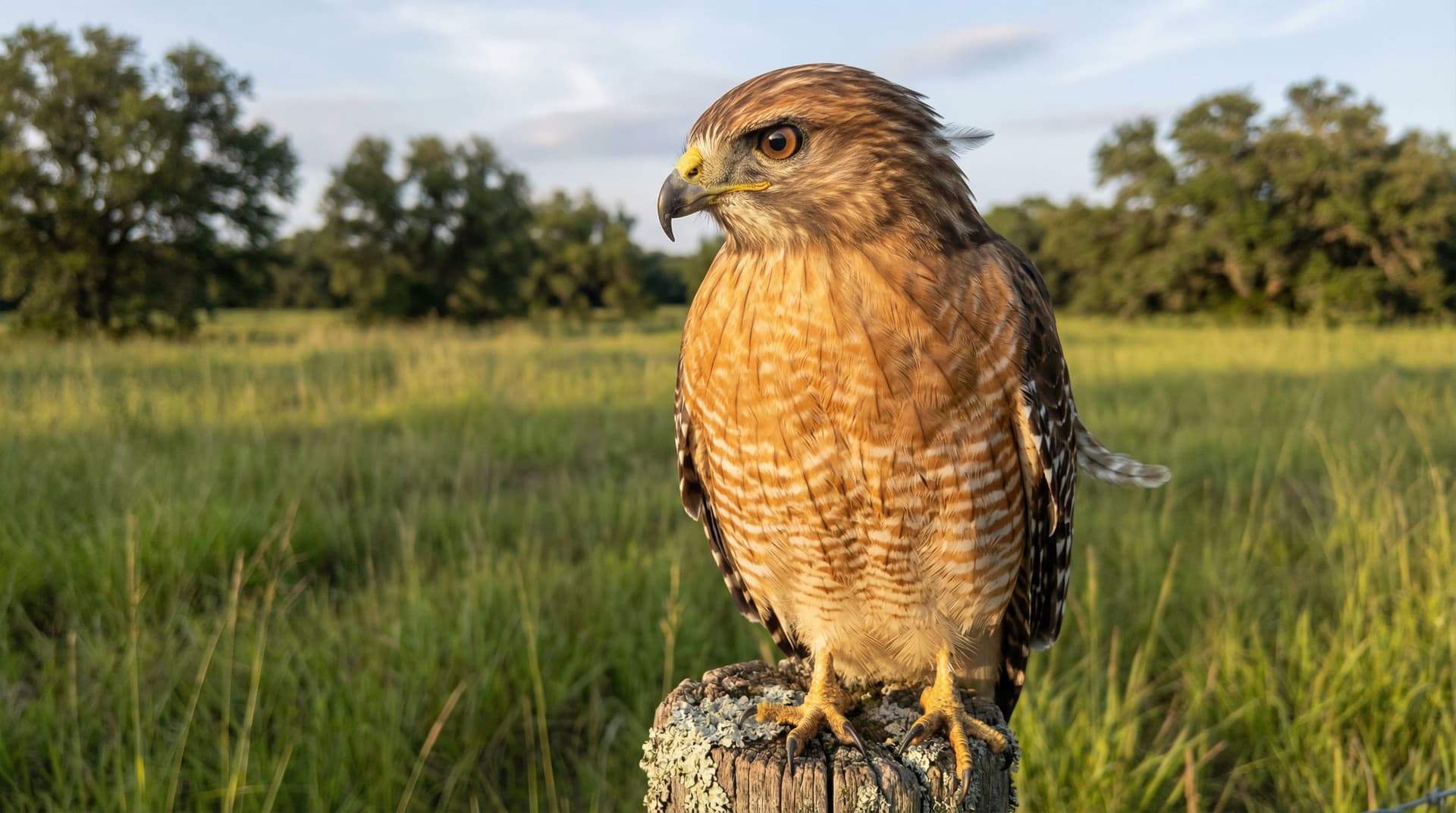

A great bird species portrait guide starts with one truth: every bird is different. The tilt of a cockatiel's crest, the iridescent flash on a hummingbird's throat, the fierce gaze of a red-tailed hawk, these details define a species and make a portrait feel alive.
Whether you're photographing your own pet bird or a wild visitor at your feeder, we want to help you capture images that truly honor what makes your feathered friend unique. In this guide, we'll walk through species-specific observation tips and photography techniques so you can create portraits worthy of your wall, or turn them into beautiful custom bird art.
1. Know Your Bird: Why Species-Specific Details Make or Break a Great Portrait
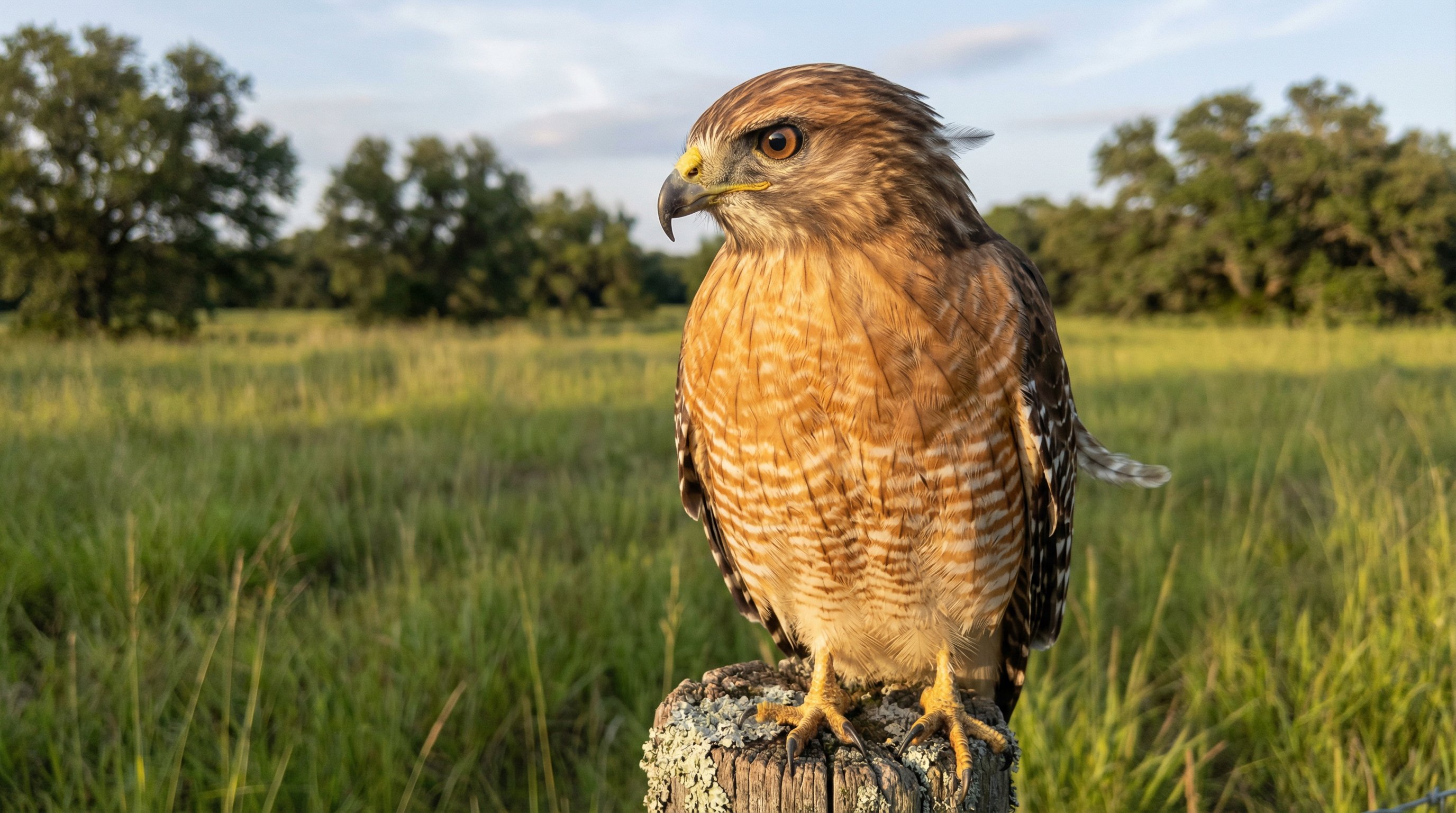
Here's the thing, a portrait of a macaw and a portrait of a barn owl require completely different approaches. Their postures, plumage patterns, and behaviors are worlds apart. If you treat every bird the same behind the camera, you'll miss what makes each one special.
Study Behavior Before You Shoot
Spend time simply watching your bird before picking up a camera. Species-specific habits reveal the best portrait moments:
- Raptors tend to scan their surroundings with intense, deliberate head turns, perfect for capturing that piercing stare.
- Songbirds pause briefly while feeding or perching, giving you a narrow but predictable window.
- Parrots and cockatoos are expressive and often tilt their heads, fan their crests, or vocalize with open beaks.
These behavioral cues help you anticipate poses instead of chasing them. A red-shouldered hawk will give you a slow, regal turn. A finch will give you half a second. Knowing the difference is everything.
Plumage Changes Through the Year
Many bird species look dramatically different depending on the season. Male goldfinches go from dull olive in winter to brilliant yellow in breeding season. Female ducks often sport camouflage browns year-round, while drakes flash iridescent greens and blues.
Breeding plumage is typically the most striking for portraits. But subtle seasonal details matter too, lores (the small area between eye and beak) can become vibrant during mating season, adding a pop of color that brings a portrait to life. Understanding these cycles means you'll know when to shoot, not just how.
Angles That Reveal Character
A straight-on, front-facing shot of a bird's head often falls flat. The beak can look compressed, the eyes lose depth, and the overall image feels lifeless.
Instead, try a slight downward or three-quarter angle. This reveals the nostrils, lores, and crown shape, features that distinguish one species from another. For birds with prominent crests like cockatiels or bird of paradise portraits, a slight side angle showcases that silhouette beautifully.
The goal is to highlight what makes your bird unmistakable. A puffin's colorful beak plate, a grouse's subtle barring, a parrot's eye ring, these are the details that transform a snapshot into a portrait.
Go Deep on One Species
If you really want to master bird portraits, pick one species and study it obsessively. Learn its world. How does it move through space? When is it calm versus alert? What postures signal contentment?
This deep familiarity pays off. You'll start seeing moments others miss. And when you're ready to turn those photos into custom bird wall art, you'll have source images packed with personality and authentic detail.
2. From Photo to Art: Tips for Capturing a Portrait-Worthy Shot of Any Bird Species
You know your bird's quirks. Now let's talk technique. A portrait-worthy photo doesn't require a $10,000 lens, but it does require intention.
Get the Eyes Sharp (Everything Else Is Secondary)
In any bird species portrait, the eye is the anchor. If the eye isn't sharp, the image won't connect with the viewer. Period.
- Use single-point autofocus locked directly on the bird's eye.
- Shoot at wider apertures (f/4 to f/6.3) to isolate the head from the body and background.
- Look for a catchlight, that tiny reflection of light in the eye. It adds life and dimension instantly.
Without that catchlight, even a technically perfect photo can feel dull. Position yourself so the light source reflects in the eye. It makes a massive difference.
Shoot at Eye Level
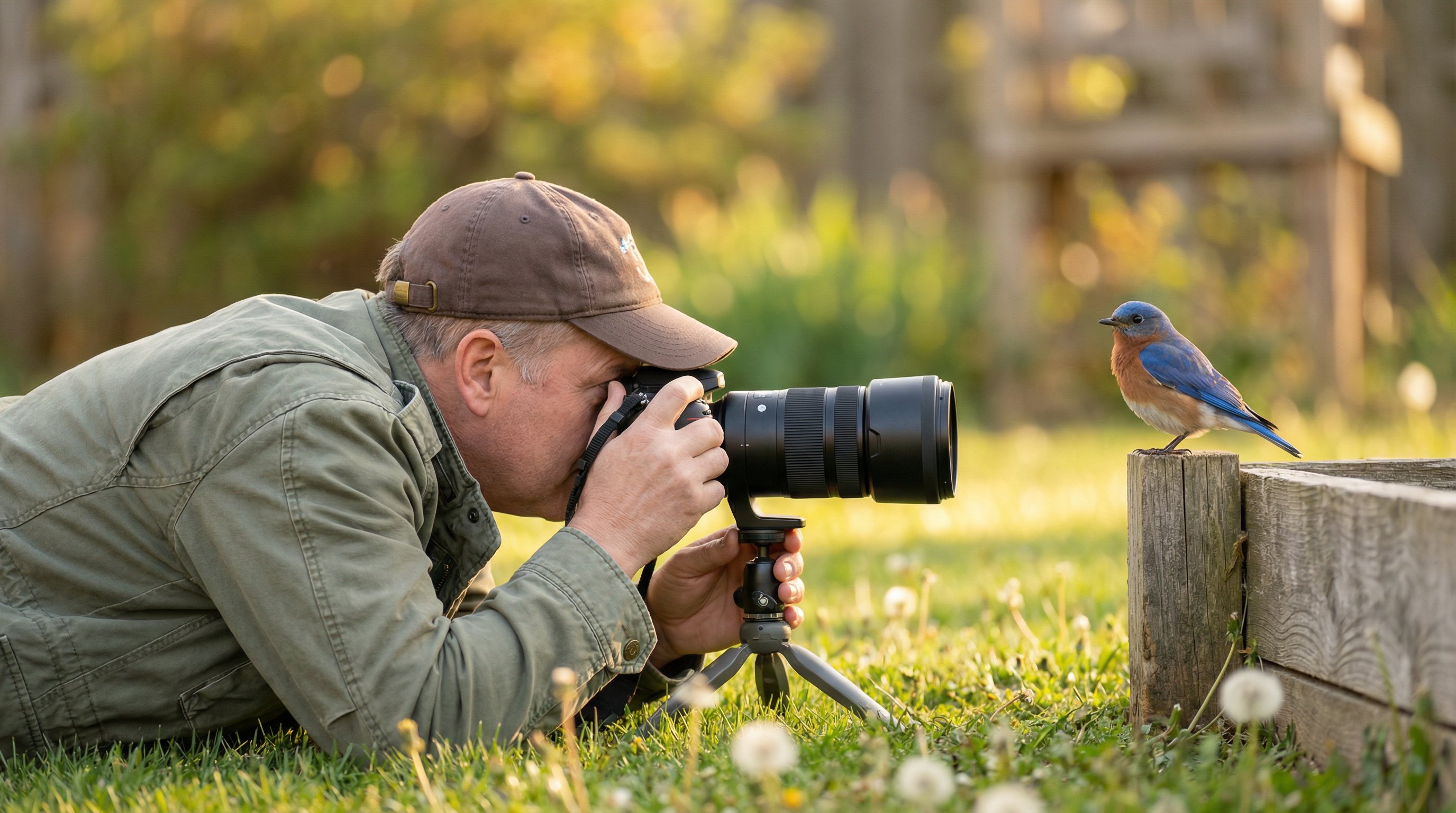
This is one of the simplest yet most transformative tips in any bird species portrait guide. Get down to the bird's eye level. Yes, even if that means lying flat on the ground for a robin or crouching by a pond for a duck.
Shooting down at a bird creates a disconnected, documentary feel. Eye-level shooting creates intimacy, the viewer feels like they're meeting the bird face to face. For pet birds perched on a stand, simply adjust your tripod or handheld position to match their height.
Master the Light
Lighting can make or break your bird portrait:
- Front or side lighting reveals feather texture, color gradients, and fine detail.
- Overcast days provide beautifully even, diffused light, no harsh shadows across the face.
- Avoid top-down midday sun, which creates dark shadows under the brow and beak.
If you're shooting indoors with a pet parrot or budgie, position them near a large window. Natural sidelight from a window mimics the soft, even quality of an overcast sky. Many of our favorite tropical bird wall art pieces started as simple window-lit photos.
Clean Up Your Background
A cluttered background kills a bird portrait faster than anything. Use longer focal lengths (200mm+) to compress and blur the background naturally. Even a smartphone with portrait mode can help.
Wait for your bird to turn its head toward you, this front-facing or slight-angle pose, combined with a clean background, creates that intimate connection viewers love. Patience at a bird hide, a colony, or even your backyard feeder rewards you with cleaner compositions than any amount of post-processing.
Post-Processing: Small Tweaks, Big Impact
You don't need heavy editing. Focus on:
- Sharpening the eye and beak area slightly
- Adjusting exposure to brighten the face
- Cropping to improve composition (leave some breathing room around the bird)
- Enhancing lore and eye-ring colors that may have washed out
These small adjustments preserve the natural look while making species-specific details pop. And once you have a photo you love, turning it into a stunning piece of bird art prints takes under 60 seconds with AI tools, no painting skills needed.
From Portrait Photo to Wall Art
A great bird photo deserves more than a phone gallery. We've seen backyard sparrow shots and exotic macaw photos transformed into museum-quality pieces that bird lovers proudly display.
With affordable portrait pricing, you can turn your best species shots into personalized wall art. Upload your photo, preview the result for free, and choose from 70+ artistic styles. The details you worked so hard to capture, the feather barring, the eye ring, the crest angle, translate beautifully into digital bird art prints.
If you have questions about what photo works best, our bird art FAQ covers everything from image resolution to style recommendations.
Conclusion
Every bird species carries its own personality, plumage, and presence. This bird species portrait guide gives you the foundation, observe deeply, shoot intentionally, and honor the details that make your feathered friend one of a kind.
Now grab your camera, get to know your bird a little better, and create something worth framing. The best portrait is the one that makes you smile every time you walk past it on the wall.
Frequently Asked Questions About Bird Species Portrait Photography
Why is species-specific knowledge important for bird portrait photography?
Each bird species has unique behaviors, plumage patterns, and physical features that define its character. Understanding species-specific habits—like how raptors scan their surroundings or how parrots tilt their heads—helps you anticipate poses and capture authentic moments that truly honor what makes your feathered subject one of a kind.
What camera angle works best for bird species portraits?
Avoid straight-on, front-facing shots as they compress the beak and flatten the image. Instead, use a slight downward or three-quarter angle to reveal nostrils, lores, and crown shape. Shooting at eye level creates intimacy and connection, even if it means lying on the ground for ground-feeding birds like robins.
How do I ensure sharp eyes in bird portrait photography?
Eyes are the anchor of any bird species portrait. Use single-point autofocus locked on the bird's eye, shoot at wider apertures (f/4 to f/6.3) to isolate the head, and position yourself to capture a catchlight—that tiny reflection of light that adds life and dimension to the eye.
What lighting conditions produce the best bird portraits?
Front or side lighting reveals feather texture and color details beautifully. Overcast days provide even, diffused light without harsh shadows. Avoid bright midday sun from above, which creates dark shadows under the brow and beak. For indoor pet birds, position them near a large window for soft, natural sidelight.
How do seasonal plumage changes affect bird portrait timing?
Many bird species look dramatically different by season—male goldfinches shift from dull olive to brilliant yellow in breeding season. Breeding plumage is typically most striking for portraits. Subtle seasonal details like vibrant lores can add pops of color that bring your portrait to life, so timing matters.
Can I turn my bird portrait photos into wall art?
Yes, quality bird portrait photos can be transformed into stunning wall art using AI tools. Upload your best species shots, preview results free, and choose from 70+ artistic styles. The fine details you worked to capture—feather barring, eye rings, crest angles—translate beautifully into personalized bird art prints.